Inference at Scale in 2026: Cost, Latency, and System Design That Hold Up
A deep, practical guide to serving LLMs under real traffic — from speculative decoding to caching and multi-tier scheduling.
The real constraint is not tokens — it is tail latency
As of April 2026, a small fraction of slow requests can dominate user experience and cloud cost. You need architecture that is resilient to variance: model size, prompt length, and tool latency all fluctuate.
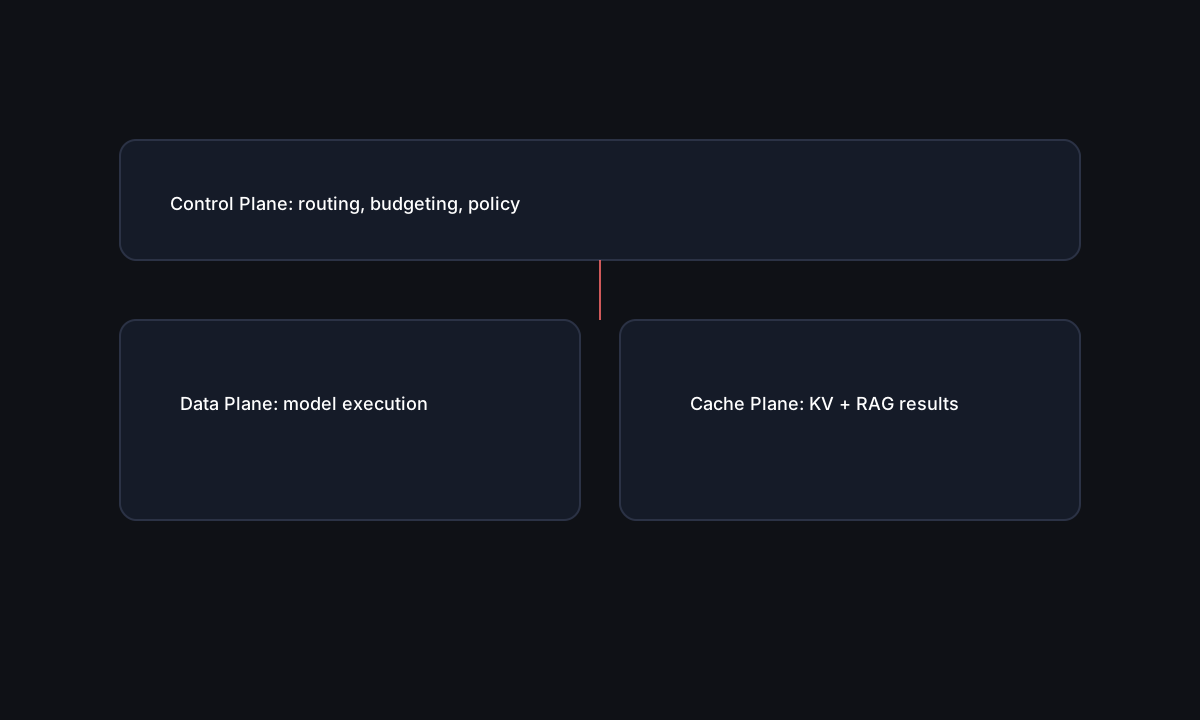
Modern inference platforms separate control, data, and cache planes to keep hot paths fast and predictable.
Serving architecture: control plane vs data plane
Treat inference like any high-scale service. Route requests through a control plane that can choose models, allocate budgets, and apply policy, then send to an optimized data plane for execution.
Advanced performance patterns
Speculative decoding and batch scheduling can cut latency without sacrificing quality. Pair that with retrieval caching and you reduce both compute and token usage.
- Speculative decoding for faster tokens when model confidence is high.
- KV-cache reuse across sessions for repeated prompts.
- RAG caching with freshness policies to avoid stale answers.
- Tiered routing: small model first, large model only when needed.
Cost controls that actually work
AI cost spirals when workloads are unbounded. Put budgets and prioritization in the platform, not in the prompt.
- Per-tenant budgets and adaptive throttling.
- Graceful degradation: switch to smaller models when load spikes.
- Asynchronous execution for non-interactive workloads.
- GPU utilization targets and autoscaling guardrails.